





Social Security is heading toward a reckoning. The trust fund is projected to run dry as early as 2032, and when it does, benefits would be cut automatically by somewhere between 23% and 28%, according to 24/7 Wall St.
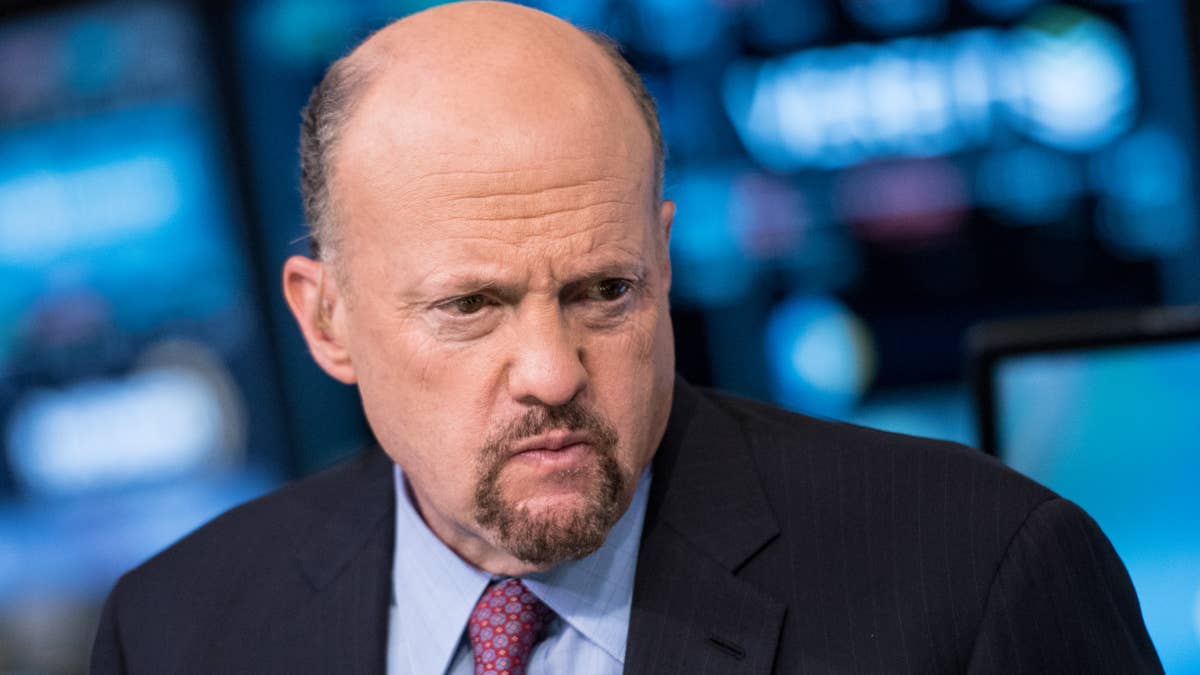
That deadline is now close enough to force a real policy debate. And Jim Cramer, host of CNBC’s “Mad Money,” just weighed in with an endorsement that is drawing serious attention, not because it is new, but because of what it actually means for wealthy Americans.
What Cramer said about Social Security
Cramer posted a video on X featuring Senator Elizabeth Warren (D-Mass.) laying out her proposal to fix Social Security’s finances. Warren’s case was direct: raise taxes on high earners, expand benefits, and stabilize the program for the long haul.
“We’ve got to make sure that the wealthy Americans pay their fair share and not force seniors to work until they drop dead,” Warren said in the video.
“Right now, a billionaire, Jeff Bezos, Bill Gates, Elon Musk, pays as much in Social Security taxes as someone who makes $175,000 a year. I’ve got a bill to fix that, and it would raise enough money to increase benefits by $200 a month for every senior,” 24/7 Wall St. noted.
More Personal Finance:
- Fidelity has a warning for anyone who left a 401(k) at an old job
- Living trusts: what they do and who needs one
- Fidelity sounds alarm on 401(k)s, IRAs
Cramer’s caption on the post said “Nor should I,” referring to paying the same Social Security tax as someone earning $175,000. He then added: “This is a very good idea even as it contravenes the way the law envisioned,” 24/7 Wall St. reported.
That last line is important. Cramer is not just endorsing a tax idea. He is acknowledging that it would fundamentally change the structure of the program, and backing it anyway.
How the Social Security wage base limit actually works
To understand why this proposal is so contentious, it helps to understand the current structure. Social Security taxes apply only up to a certain income threshold, known as the wage base limit. In 2026, that limit is $184,500, up from $176,100 in 2025, according to the Social Security Administration.
Once a worker’s earnings cross that threshold, they stop paying Social Security taxes for the rest of the year. But here is the part Warren’s critics often leave out: Income above the cap is also not counted when calculating Social Security benefits. Elon Musk and a teacher earning $60,000 a year will collect the same monthly check if their covered earnings are similar.
Warren’s proposal would change that equation. Higher earners would pay Social Security taxes on all of their income, but they would not receive higher benefits in return. Cramer himself noted this breaks from the original design of the program, which was built as an earned benefit tied to what workers paid in.
Galai/Getty Images
Why Sen. Warren’s Social Security proposal is generating so much heat
The argument in favor is straightforward. Social Security is running out of money. Wealthy Americans stop contributing once they hit the cap. Removing or lifting that cap would bring in significantly more revenue and could allow for benefit increases at the same time.
Warren says her bill would raise enough to increase payments by $200 a month per senior, which would be a meaningful boost for households that depend on those checks for basic expenses.
The argument against the proposal is also clear. Social Security was designed as a contributory system where benefits are tied to taxes paid. Requiring high earners to contribute more while receiving nothing extra in return effectively turns the program into a wealth transfer, which critics say could erode the broad political coalition that has kept Social Security intact for decades.
The key numbers behind the Social Security debate:
- The Social Security trust fund is projected to be depleted as early as 2032, according to 24/7 Wall St.
- An automatic benefit cut of 23% to 28% would follow if Congress does not act, 24/7 Wall St. noted.
- The current wage base limit for 2026 is $184,500, up from $176,100 in 2025, according to the Social Security Administration.
- Warren’s bill would require high earners to pay Social Security taxes on all income, not just income below the cap, 24/7 Wall St. reported.
- A projected benefit increase under Warren’s proposal is $200 a month per senior, 24/7 Wall St. noted.
- Higher earners would pay more under the proposal but receive no additional benefits in return, 24/7 Wall St. confirmed.
What critics say about lifting the cap
Opponents of the wage base change argue that the proposal does not actually fix Social Security. It delays the problem while changing the fundamental nature of the program.
If the structural mismatch between contributions and benefits is broken, they say, the broad support that has protected Social Security for generations could begin to fracture.
Some also argue that higher taxes on top earners could lead to more aggressive tax planning and avoidance strategies, reducing the real-world revenue gain below projections. And without addressing longer-term demographic pressure, including a shrinking ratio of workers to retirees, any fix that only targets revenue may eventually face the same shortfall again.
Why Cramer’s endorsement matters anyway
Cramer is not a politician, and his post is not a legislative proposal. But his willingness to publicly back the idea carries weight precisely because he is a high earner who would personally pay more under the plan. He said so directly.
That kind of endorsement shifts the political framing slightly. When someone who would bear the cost of a proposal says it is a good idea, it becomes harder to dismiss as class warfare and easier to discuss as a practical policy question.
For retirees, the core message is simple: Social Security needs a solution, and the window to act before automatic cuts arrive is narrowing.
Whether the fix comes through higher taxes on the wealthy, structural reforms, or some combination, the 2032 deadline is no longer abstract. It is a real constraint that Congress is running out of room to ignore.
Related: Social Security beneficiaries just got some shocking news